Introducing the REAL AD Sleep Study
June 11, 2026
We recently launched a new sub-study — REAL AD Sleep, dedicated to understanding how sleep and circadian rhythms change with age and how these changes relate to indicators of Alzheimer's disease and thinking abilities.
Sleep is one of the essential pillars of health and one of the most powerful tools we have for long-term well-being. While we sleep, the body regulates the immune system, balances hormones, stabilises mood, and consolidates the memories formed during the day. It is not a simple “switch off”, but an active and necessary state.
How Sleep Protects the Ageing Brain
Although our bodies rest during sleep, the brain remains active. During the deepest stage of sleep, the slow-wave sleep (SWS), a specialised waste clearance network, known as the glymphatic system, switches on. Often described as the brain's "washing system," it flushes out toxic waste products that accumulate throughout the day, including amyloid-beta and tau proteins, the key substances associated with Alzheimer's disease.
When sleep is disrupted or insufficient, this vital cleaning process is impaired, allowing harmful proteins to build up over time, thus increasing the risk of neurodegenerative processes.
Sleep disturbances are common in people with Alzheimer's, but what is particularly important is that they often appear years before any noticeable cognitive decline. This makes disrupted sleep not just a symptom to manage, but a meaningful early signal of brain health.
One of the most prevalent, yet under-diagnosed, sleep-related risk factors is obstructive sleep apnoea (OSA) (https://publications.ersnet.org/content/erj/47/1/194). OSA is a condition in which the throat muscles relax and collapse during sleep, causing repeated pauses in breathing and drops in blood oxygen levels. This leads to fragmented, un-restorative sleep and daytime fatigue. The oxygen drops, and sleep disruption caused by OSA appear to accelerate toxic protein accumulation and trigger neuroinflammation, which are processes central to the development of AD. Critically, many people with OSA are entirely unaware that it is happening.
“Sleep disturbances often precede cognitive decline by years, making them a uniquely important window for early detection and intervention.”
Sleep Is Not a Static Process
Most research on sleep and brain health has focused on single snapshots: one night in a sleep laboratory, or a brief questionnaire about sleep quality. But sleep is not a fixed, unchanging state. It fluctuates from night to night, shifts across weeks and months, and responds to stress, illness, and lifestyle in ways that a single measurement will often miss.
Continuous, long-term monitoring is essential to capture this variability. And crucially, it is not just how long you sleep that matters for your health, but how regularly you sleep. Emerging evidence shows that sleep regularity, which is the consistency of your sleep and wake times from day to day, may even be a stronger predictor of long-term health outcomes than total sleep duration alone.
REAL AD Sleep will address this critical knowledge gap by tracking sleep and circadian rhythms continuously over a full year and examining how evolving patterns relate to Alzheimer's biomarkers and cognitive trajectories (see Figure 1).
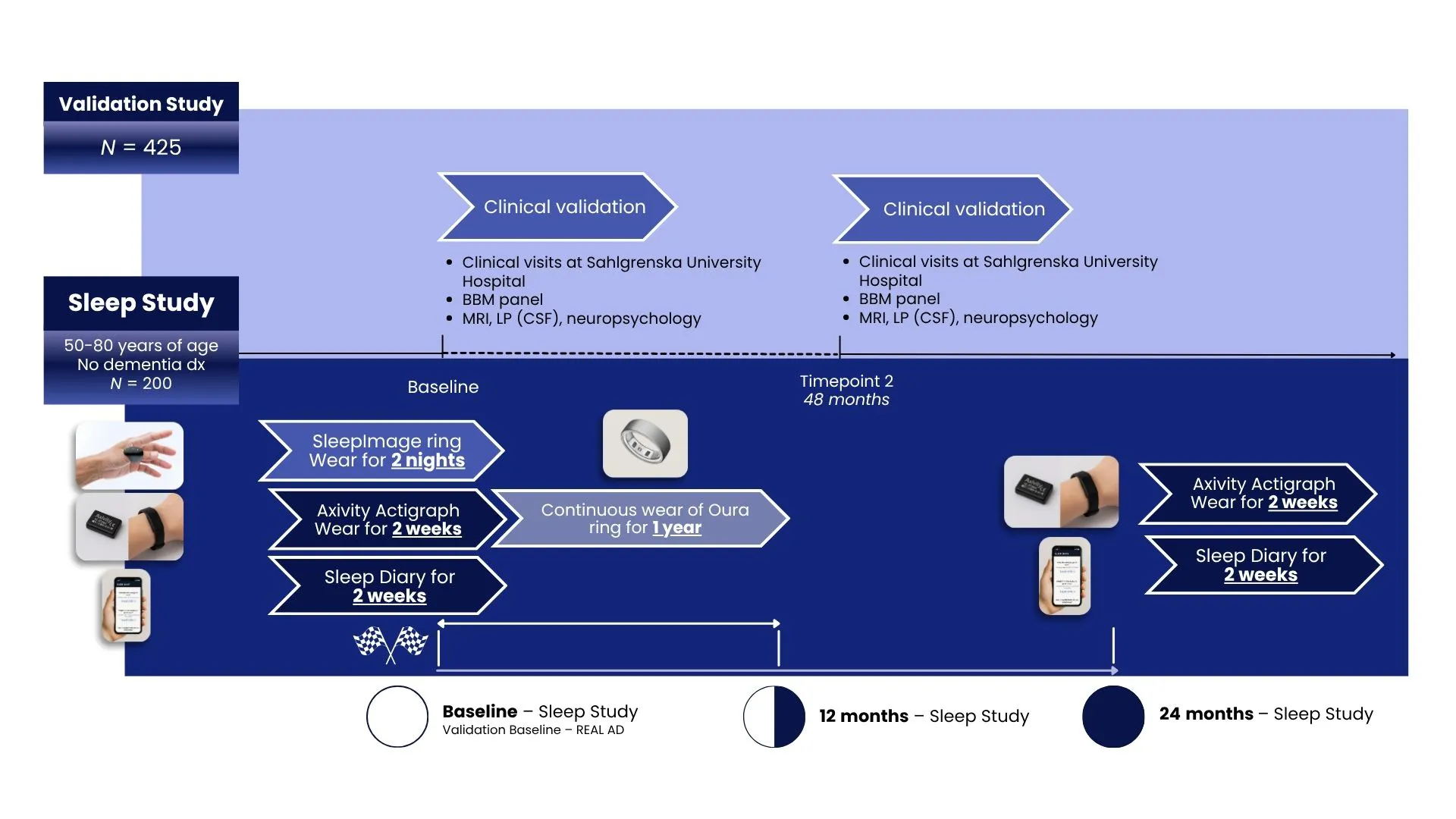
Figure 1. REAL AD Sleep study design
What We Will Measure
The study will cover several key dimensions of sleep health:
- Sleep duration — total time asleep each night
- Sleep stages — including deep slow-wave sleep (critical for glymphatic clearance) and REM sleep
- Sleep fragmentation — how often and for how long sleep is interrupted during the night
- Sleep regularity — consistency of sleep and wake timing across days, weeks, and months
- Breathing during sleep — detection of oxygen drops, signs of obstructive sleep apnoea (OSA)
- Circadian rhythms — 24-hour rest–activity patterns and the body’s internal clock
- Sleep physiology — cerebrospinal fluid (CSF) sample of orexin (also known as hypocretin; collected as part of the validation study), a brain signalling molecule that acts as the body's natural wake-promoting button.
How We Will Measure It
Apart from the initial study onboarding session at the Mölndal Memory clinic, this study is entirely remote. All sleep data are collected at home using three complementary wearable devices (see Figure 2):
- The Axivity (AX3) Actigraph - a small wristband accelerometer worn like a watch, for 14 days at the start of the study and again 2 years later. It records continuous movement around the clock, allowing us to reconstruct rest–activity rhythms, detect disruptions to the body’s internal clock (circadian rhythms), and calculate sleep regularity indices. Participants also complete a Sleep Diary throughout each wear period, capturing their subjective sleep experience and daytime habits — such as caffeine intake, sleep aids and medication use — that can influence sleep quality.
- The Ōura ring - a smart ring worn on the finger for a 12-month period. It has biosensors that record various parameters like movement, heart rate and temperature. From these signals, it derives detailed sleep-stage data, including slow-wave and REM sleep, providing a nightly picture of sleep architecture.
- SleepImage Oximetry ring - a medical-grade device that is worn for 2 consecutive nights. Designed specifically to measure blood oxygen levels during sleep, it enables non-invasive, home-based screening for sleep-disordered breathing, including OSA.
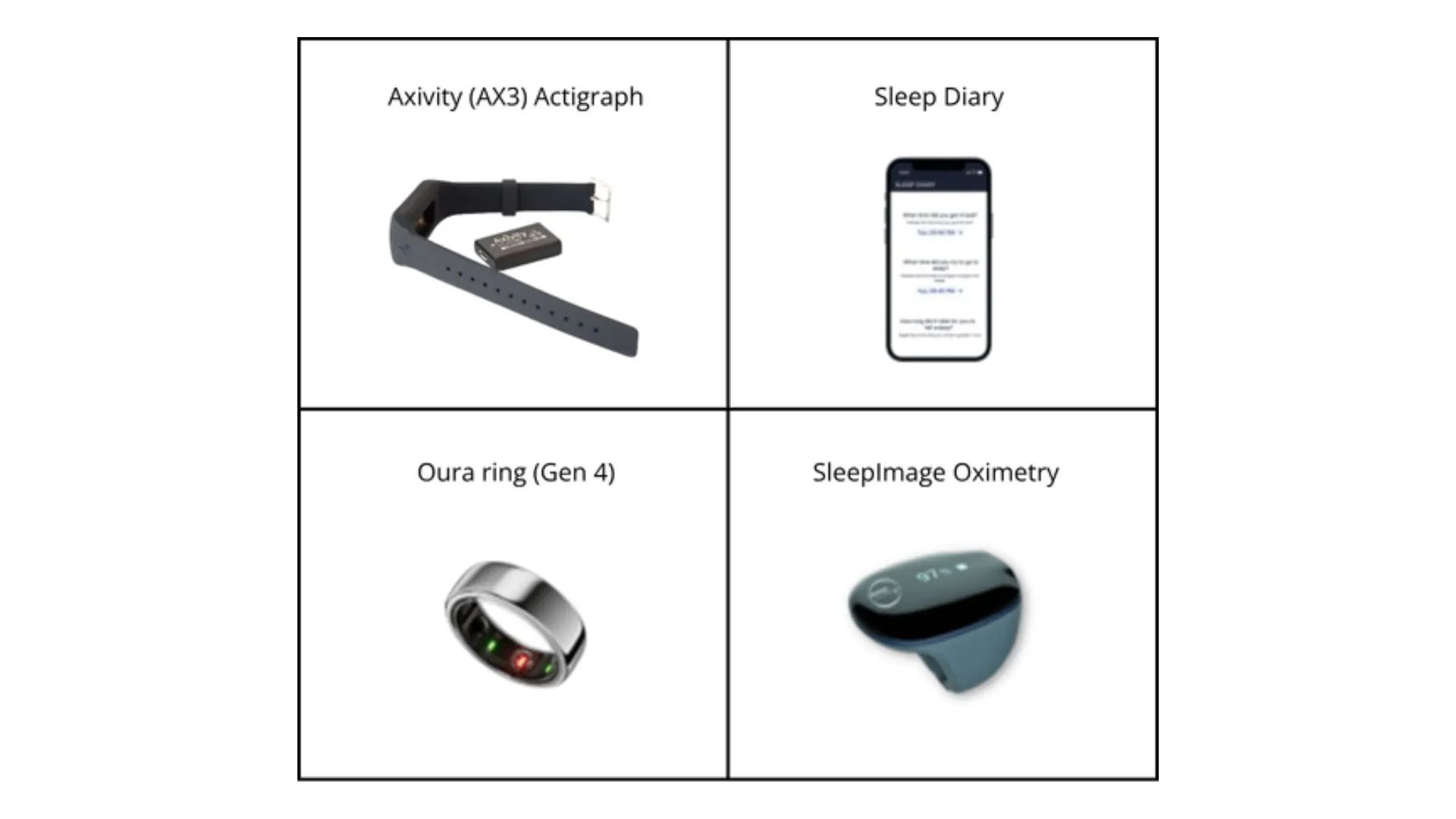
Figure 2. Sleep measurement methods
Meet The Team Behind the Study
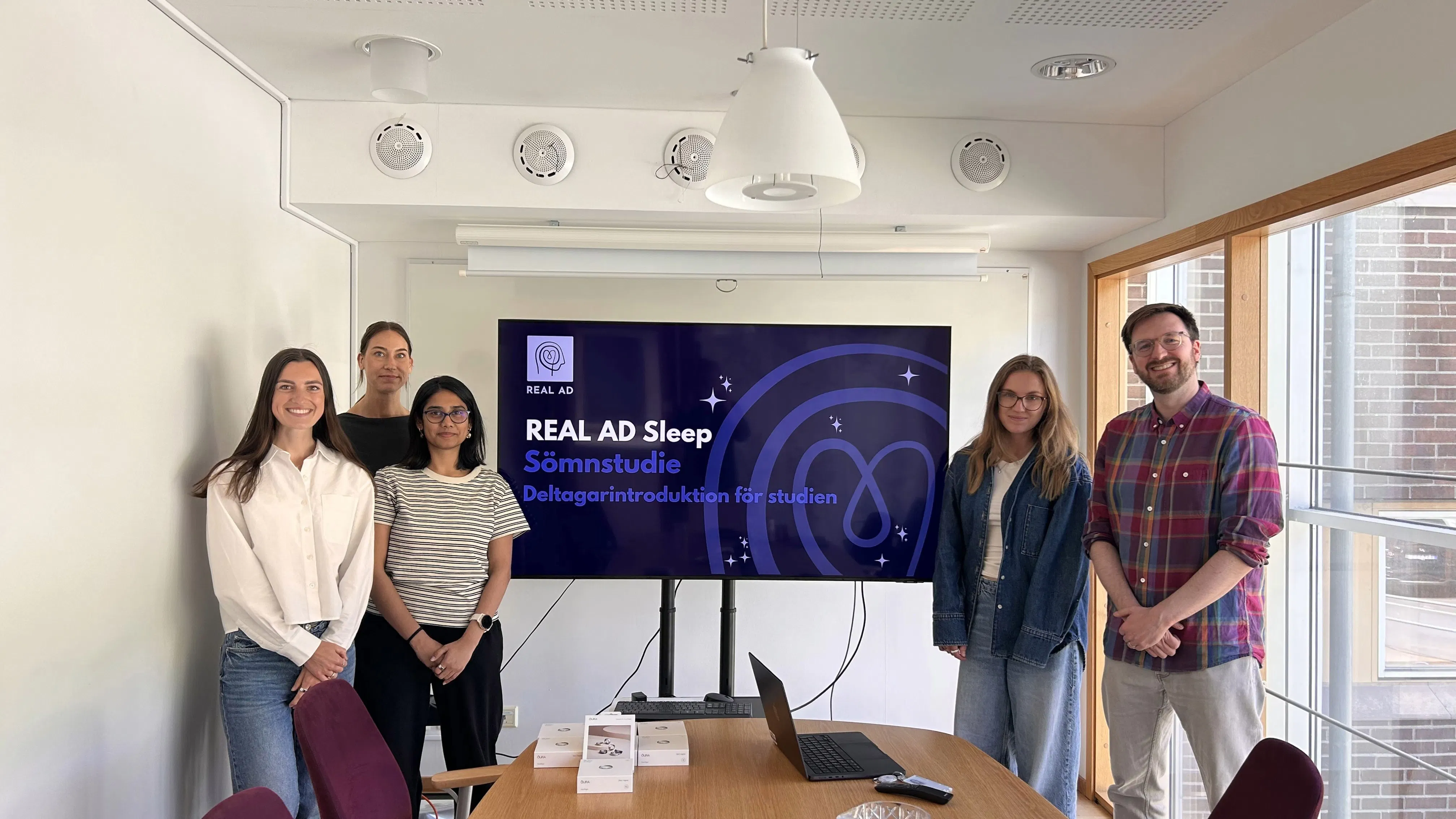
Left to right: Laura Stankeviciute (Co-Principal investigator, postdoctoral researcher), Louise Gustafsson (research assistant), Roshini Sridhar (research assistant), Emma Gummesson (research assistant) and Michael Schöll (Principal investigator).
We are grateful to our participants for their enthusiasm, and engagement with this new study. And are genuinely excited to kick this off, and to share what we discover along the way.
If you would like to read more about sleep and brain health, check out our previous article: Why Sleep Matters for Brain Health — and Alzheimer's Disease Prevention
And keep an eye out for upcoming articles on the relationship between sleep and Alzheimer's disease, we promise …there is much more to come.