Meet the REAL AD team: Iris Bosch
May 11, 2026
Iris Bosch is one of the project leaders for the REAL AD study. She has a research master’s degree in Brain and Cognitive Sciences from the University of Amsterdam and has been working with Alzheimer’s disease (AD) related projects for over 6 years now. She is particularly interested in the application of AD biomarker findings to clinical practice, innovation implementation, as well as connecting science to society. As part of our new series “Meet the team”, we asked her a few questions:
Was there a defining moment in your life that led you to the work you do now?
My background is in neurobiology, and I completed a master's that trains you for a research career. During this time, I did a minor called (Nikola) Tesla (now called Collective Futures, University of Amsterdam), a five-month programme, that teaches you to translate scientific research into societal impact. That programme was transdisciplinary, allowing me to use all my research skills and combine them with project management and future-oriented thinking aimed at societal impact. It was a defining moment, as it led me to the work I find most gratifying.
As a project leader, what would you say is your favourite aspect of the role?
I've been with the group for almost five years, starting as a research associate and learning a lot on the job. My role as project leader is diverse, I get to wear many hats depending on the day's demands. We're a small team that has managed to create a large study. It involves creative thinking, careful planning, and technical aspects like coding and data analysis. I also get to connect with our study participants and hear their stories, which is an absolute privilege.
What is a milestone or achievement within the study that you are proud of?
I can think of two primary instances. The first was presenting a poster at a conference in Toronto, Canada, where several industry members enquired how we successfully set up such a large (remote) study. Creating a real-world, remote study in collaboration with primary healthcare can be challenging, and I feel proud of our team knowing we could be a template for others aspiring to do similar work. The second milestone is the REAL AD participant days in April 2025 and 2026. Our participants continue to make this study possible through their time and commitment, and this was an opportunity to give back to and celebrate our community.
When you envision the future of the REAL AD study, what do you wish it can accomplish?
I hope we can foster a research community around this study, so it can remain dynamic and explore various aspects of Alzheimer's disease, like sleep and sex differences, while supporting innovation. For example, we're currently looking into facilitating remote blood sampling. Beyond research, I hope our work is noticed and adopted by healthcare settings to support people living with Alzheimer's.
Lastly, what is the one (or more) thing(s) you consistently do to support your brain health?
Being outdoors in nature and away from my phone, going on long hikes and walks. I've also incorporated biking and yoga into my routine, and I find that it really calms me. One thing I felt required more work is my sleep schedule, but as we’ll soon be launching another substudy for REAL AD (sleep study), I’ve been tracking my sleep with the Oura ring and it’s actually suprisingly well. Fun to see!
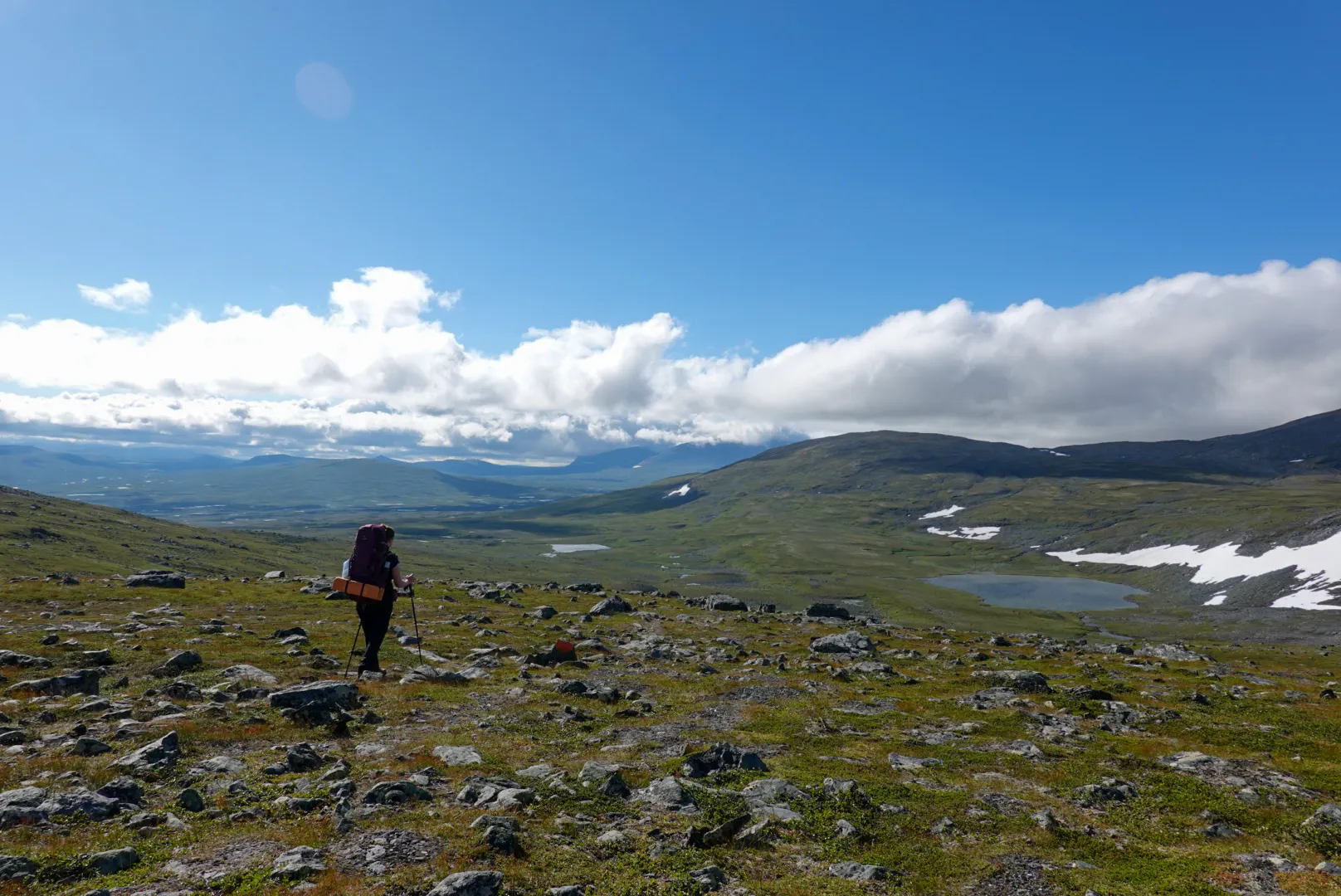
Picture of Iris hiking in the Swedish mountains.

Taken during a hike in the Swedish mountains.